
濕 疹
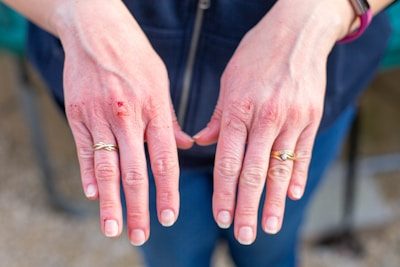
Atopic dermatitis (Eczema): Evidence-based treatment
The framework is a treatment ladder, and every level continues the one beneath it. Emollients never stop. Treatment ladder:
| Step | Treatment | Indication |
| Foundation | Emollients, bathing practice, trigger avoidance | Everyone, always |
| Step 1 | Topical corticosteroids; topical calcineurin inhibitors | Mild-to-moderate; flare treatment |
| Step 2 | Proactive maintenance twice weekly; non-steroidal topicals (PDE4 inhibitors, topical JAK, tapinarof) | Recurrent flares at the same sites |
| Step 3 | Narrowband UVB phototherapy | Moderate disease inadequately controlled by topicals; useful steroid-sparing option |
| Step 4 | Conventional systemics: ciclosporin, methotrexate, azathioprine, mycophenolate | Moderate-to-severe |
| Step 5 | Biologics; oral JAK inhibitors | Moderate-to-severe inadequately controlled by the above |
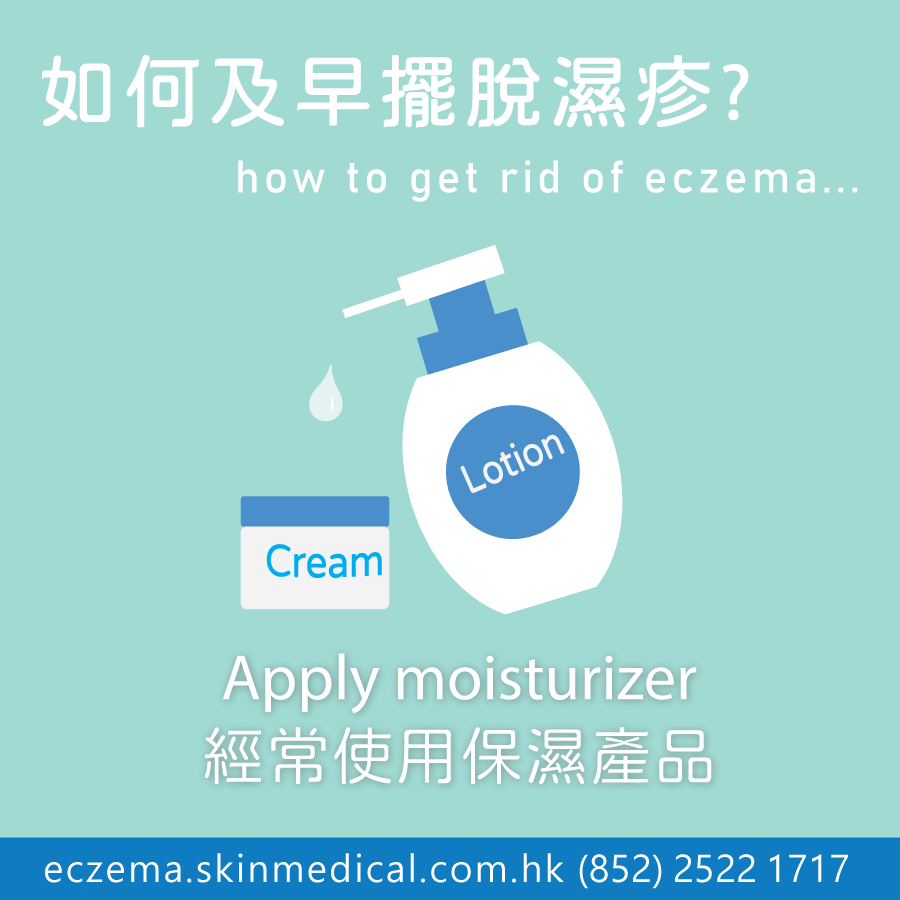
Foundation: emollients and skin care
Unglamorous, and the single most important intervention. Emollients reduce flare frequency, reduce the amount of topical steroid needed, and improve comfort.
- Quantity is the issue, not brand. Adults need roughly 250–500 g per week for widespread involvement; most people use a fraction of that. Under-application is the commonest reason emollients "don't work."
- Apply at least twice daily, and always within a few minutes of bathing.
- Apply downwards in the direction of hair growth, to reduce folliculitis.
- Match the vehicle to the season. Hong Kong's summer humidity makes heavy ointments intolerable — a lighter cream or lotion that is actually used beats a rich ointment that is abandoned in June. In winter, and in air-conditioned offices year-round, richer preparations work better.
- Ointment for night, cream for day is a practical compromise many patients settle on.
- Bathing: short, lukewarm — not hot. Hot showers feel wonderful on itchy skin and make it markedly worse. Use a soap substitute; avoid bubble bath and fragranced products.
On prevention: daily emollient from birth was widely hoped to prevent eczema in high-risk infants. The large randomised trials that tested this — including BEEP and PreventADALL — did not show a preventive benefit. Emollients remain essential for treating eczema; the evidence does not support them as a preventive measure in babies. I mention this because the opposite is still often stated.
Step 1: Topical anti-inflammatory treatment
Topical corticosteroids remain first-line for flares and have decades of evidence behind them. Learn more...
Step 2: Proactive maintenance
The step most often skipped: This is the difference between eczema that recurs every few weeks and eczema that stays quiet. Learn more...
Step 3: NB-UVB Phototherapy
NB-UVB (311 nm) is a well-established treatment for moderate atopic dermatitis not adequately controlled by topical therapy, and it occupies a genuinely useful position on the ladder: more effective than topicals alone, without the systemic exposure of tablets or injections.Learn more...
Step 4: Conventional systemic treatment
For moderate-to-severe disease when the above is insufficient. All require baseline and ongoing blood monitoring.
Oral corticosteroids deserve a specific warning. They work rapidly and are therefore tempting, but eczema characteristically rebounds worse than before when they stop. Learn more.
Step 5: Biologics and oral JAK inhibitors
This is where atopic dermatitis treatment has changed beyond recognition. These advances represent the most significant treatment breakthroughs in dermatology in over a decade.
Biologics are injected antibodies that block a single inflammatory signal. Learn more...
Reference:
- Davis DMR, Drucker AM, Alikhan A, et al. AAD guidelines of care for the management of atopic dermatitis in adults with topical therapies. J Am Acad Dermatol. 2023.
- Sidbury R, Alikhan A, Bercovitch L, et al. AAD guidelines of care for the management of atopic dermatitis in adults with phototherapy and systemic therapies. J Am Acad Dermatol. 2023.
- Guidelines Development Panel of the Hong Kong College of Paediatricians. Management of Atopic Dermatitis in Children: 2020 Review. HK J Paediatr. 2021;26:42-57. — the key local reference; cite this prominently.
- Wollenberg A, Kinberger M, Arents B, et al. EuroGuiDerm guideline on atopic eczema. J Eur Acad Dermatol Venereol. (most recent update).
- National Institute for Health and Care Excellence. Atopic eczema in under 12s: diagnosis and management. CG57.
- Leung R, Wong G, Lau J, et al. Prevalence of asthma and allergy in Hong Kong schoolchildren: an ISAAC study. Eur Respir J 1997.
- Childhood Wheeze, Allergic Rhinitis, and Eczema in Hong Kong: ISAAC Study from 1995 to 2015. — source of the 21-year local trend data.
- Severity scoring of atopic dermatitis: the SCORAD index. Consensus Report of the European Task Force on Atopic Dermatitis. Dermatology 1993;186:23-31.
- Efficacy and Safety of Lebrikizumab in Combination With Topical Corticosteroids in Adolescents and Adults With Moderate-to-Severe Atopic Dermatitis: A Randomized Clinical Trial (ADhere). JAMA Dermatol.
- ARCADIA 1 and ARCADIA 2 — two identically designed pivotal phase III trials enrolling more than 1,700 patients, evaluating nemolizumab administered subcutaneously every four weeks versus placebo with background topical corticosteroids.
- Sanofi. Press release: decision not to submit amlitelimab in atopic dermatitis for global regulatory reviews. Paris, 24 July 2026.
- Simpson EL, Bieber T, Guttman-Yassky E, et al. Two Phase 3 Trials of Dupilumab versus Placebo in Atopic Dermatitis (SOLO 1 and SOLO 2). N Engl J Med. 2016.
- Chalmers JR, et al. BEEP trial: daily emollient during the first year of life for preventing atopic dermatitis. Lancet. 2020. — the negative prevention trial cited in the article.
- Hong Kong Drug Office, Department of Health — verify local registration status of every systemic agent named.

